
Equal at 6, Everything Changes at 7: When Does the STEM Gap Really Begin?
Why is only one in five ICT specialists a woman? And why is only one in three STEM graduates a woman? The question is often dismissed with a glib “boys are just better with numbers,” but the science says otherwise. At our internal all-hands meeting, Ersilia Silvestri, data virtualization specialist and data analyst at Miriade, walked us through a French study that followed some 2.6 million children between 2018 and 2022. The data are clear: up to age 7, girls and boys have the same logical and mathematical abilities. The gap opens later, at school, and feeds on stereotypes, performance anxiety, and unconscious bias.
The research
1. We all start out equal (up to age 7).
The first key finding of the research is that the “gap” does not exist in nature. Cognitive studies show that:
- in infants: boys and girls have the same core knowledge of objects, space, and numbers;
- up to age 6–7: cognitive test results are virtually identical. Starting logical abilities are the same.
If the biology is the same, when does the difference appear?
2. The drop in first grade
The researchers used national assessments at three points: at the start of first grade (T1), in the middle of the year (T2), and at the start of second grade (T3).
- At T1 (September, first grade): girls' and boys' results are very close.
- At T3 (September, second grade): after just one year of school, the gap that disadvantages girls is four times larger.
The gap appears regardless of school type, region, or the child's age in months. There was, however, one finding that surprised the researchers more than any other.
3. The “COVID paradox”: less school, a smaller gap?
The analysis included the 2019/2020 cohort, the lockdown year, when children missed about 52 days of in-person school. Against all expectations, the gender gap narrowed during that period. Being away from the physical school environment made boys' and girls' performance more similar. This points to a strong hypothesis: it is not the subject itself that is hard for girls, but the school and social context that holds back their performance.
4. Why does it happen? 3 key factors
The research and related studies cited at our all-hands meeting point to three cultural factors that fuel the gap.
- Transmitted anxiety: many primary school teachers are women who themselves had an anxious relationship with math. Research has shown that this anxiety is unintentionally passed on to girls (a negative “role model” effect).
- The talent vs. effort bias: when a boy does well in math, people tend to say he is “a natural” (innate talent). When a girl does well, they say she “works very hard.” This teaches girls that they have to work twice as hard to succeed, which breeds insecurity and performance anxiety.
- Rigid teaching: before school, logic is play. At school, math is “boxed into” rigid rules, where gender stereotypes often find fertile ground.
3 practical actions to close the STEM gender gap
At Miriade, we believe that understanding the problem is only half the work. The other half is acting on it. Based on the research findings, we have identified three practical actions that any of us, as parents, educators, aunts, uncles, or managers, can take right away to reverse the trend.
1. Change the vocabulary: talent vs. persistence
The research highlights a damaging bias: boys' success in math is often attributed to “natural talent” (“he's a natural”), girls' success to effort (“she works hard”). This teaches girls that math is not their “natural territory.” The practical action: stop praising innate intelligence (“You're a genius!”). Start praising process and strategy (“You worked hard to solve this problem!”). Teach that logic is a muscle you train, not a magical gift.
2. Normalize mistakes (growth mindset)
Girls tend to experience mistakes in math as a personal failure that touches their identity, far more than boys do. This creates anxiety that blocks learning. The practical action: when a girl (or a junior colleague!) makes a mistake, don't console her by saying “this isn't for you.” Treat the mistake as useful data for improving. Show that even the best women developers and scientists spend their time fixing mistakes, not writing perfect solutions on the first try.
3. Visibility: “If you can see it, you can be it”
It sounds like a cliché, but the data confirm that the lack of female role models in technical roles reinforces the gap. If a child sees only women as primary school teachers and only men as physics teachers, their brain sorts skills by gender. The practical action: tell different stories. At Miriade, we make a point of giving a voice to our women technical experts, and in everyday life it takes very little: give a book about Marie Curie, show a video of a woman aerospace engineer, or simply don't assume that the “technical lead” is a man. Why are we writing about this on a company blog? Because cultural change does not happen by decree, but through everyday awareness. Building an inclusive workplace tomorrow means changing the way we talk about “talent” and “numbers” today.
Growth mindset and gender equality: the Miriade approach
At Miriade, we believe in a growth mindset. We teach our junior team members that a mistake is not a failure, but useful data for improving. If, from an early age, a boy's success in math is attributed to “natural talent” and a girl's only to “hard work,” we create performance anxiety that is likely to drive bright minds away from tech. What do we actually do? We don't just talk about it. Miriade has adopted a gender equality action plan and invests continuously in ethics training. We want to be a place where:
- mistakes are part of the process: whether you are learning to count or designing a cloud architecture, you will never hear “this isn't for you”;
- role models matter: we give a voice to our women technical experts because “if you can see it, you can be it”;
- language is inclusive: because the words we use at the office today shape the culture of tomorrow.
We are an IT company, and we believe our best “product” is the human environment we build together.
__
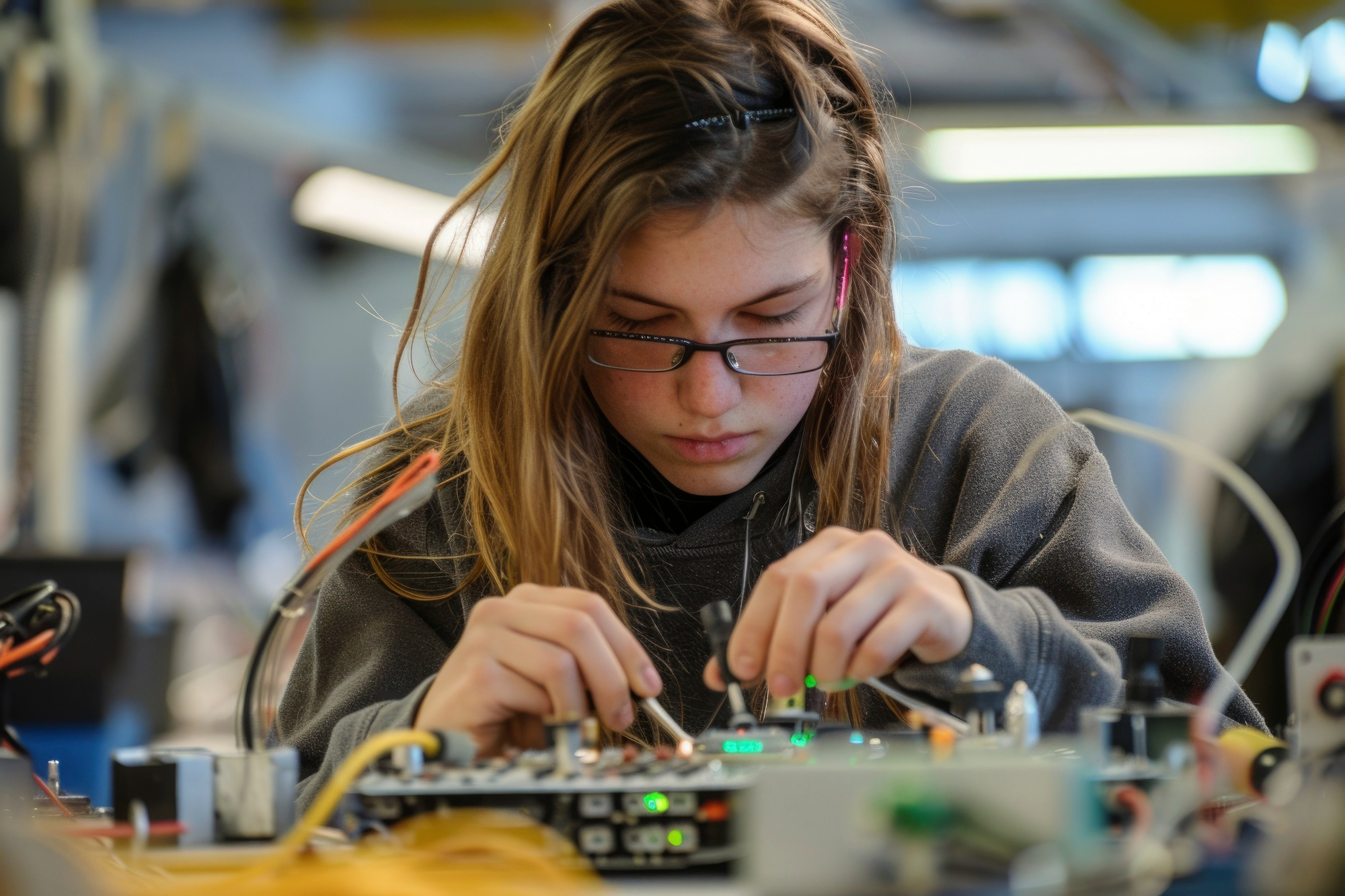
Cover Image - Designed by Magnific
Articoli simili



Vuoi rimanere aggiornato?
Iscriviti alla newsletter e scegli il tipo di contenuto sul quale vuoi rimanere aggiornato!
Ti invieremo solo argomenti di tuo interesse.